Tag: heritage

  • Eye Clinic Home

    Eye Clinic Home

    Eyeupdate Clinic & Optical Services Ltd – Trusted Eye Care in Ajuwon, Ifo, Ogun State (near Alagbole, Akute, Ojodu Berger, Iju Ishaga, Fagba, Obawole, Ogba, Ikeja, Agege, Iyana Ipaja, Kola, Command, Abulegba, Sango, Ota, Matogun, Lambe, Koye Oke, Osere, Mowe Ibafo, Ojota, Elliot bus stop, Lagos.

    Welcome to Eyeupdate Eye Clinic & Optical Services – Your Premier Eye Care Center in Ajuwon, Ogun State & Lagos State.

    Are you searching for professional, affordable eye care services in Ajuwon, Ifo, Ogun State? Look no further! At Eyeupdate Eye Clinic, we are committed to helping you see clearly and live better through comprehensive eye examinations, advanced treatments, and personalized eye care solutions.

    Expert Eye Care Services in Ajuwon, Ogun State

    Our experienced team of ophthalmologists, Opticians and optometrists provides a wide range of eye health services, including:

    Comprehensive Eye Examinations in Ajuwon and Ifo
    Cataract Diagnosis & Treatment in Ogun State
    Glaucoma Screening & Management
    Eyeglasses & Contact Lenses Fitting
    Pediatric Eye Care Services for children in Ogun State
    Emergency Eye Care & Eye Injury Treatment
    Treatment for Eye Infections & Other Conditions

    Why Choose Eyeupdate Clinic & Optical Services?

    Trusted Eye Care Provider in Ajuwon, Ifo, Ogun State
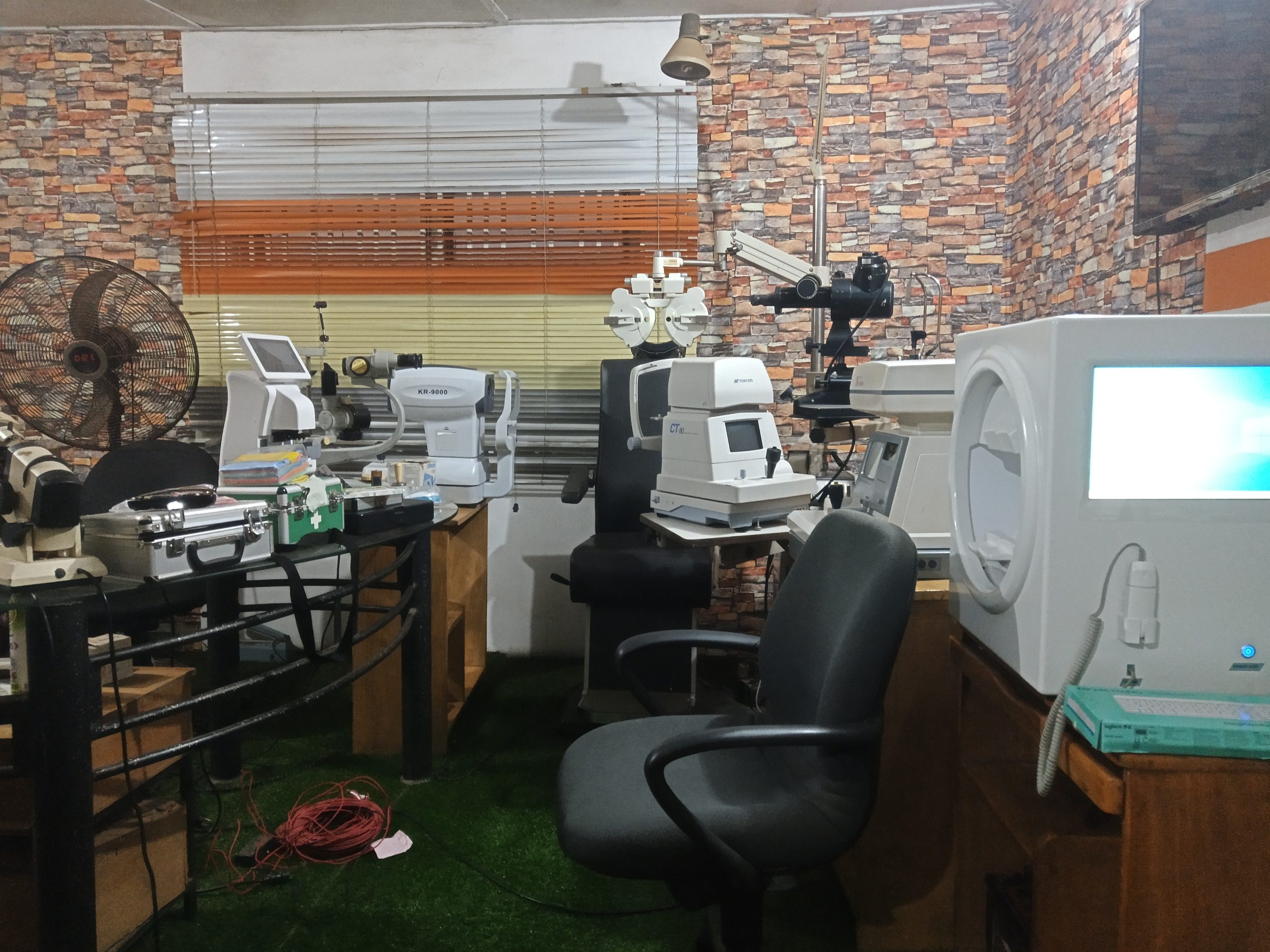
    State-of-the-Art Diagnostic Equipment for accurate eye health assessment
    Affordable Eye Care Services tailored to your needs
    Friendly, Caring Staff dedicated to your comfort and well-being
    Convenient Location in Ajuwon with flexible appointment scheduling
    Community-Focused Eye Health Solutions in Ogun State

    Book Your Eye Examination Today

    Your vision is invaluable. Schedule an appointment with our professional eye care team in Ajuwon, Ifo, Ogun State. Call us at 08034971582 or use our online booking form to secure your visit. We are here to help you see the world more clearly!

    Visit Us at Eyeupdate Clinic for your vision needs

    Address: 1, Ajuwon bus stop beside M. R. S. Petrol station, Ajuwon, Ifo, Ogun State
    Hours: Monday – Saturday, 8:00 AM – 9:00 PM
    Phone: 08068084591, 08034971582
    Email: info@eyeupdate.com.ng

    Stay Updated on Eye Health Tips & Special Offers

    Follow us on social media for the latest updates, eye health tips, and exclusive offers tailored for our community in Ogun State.

    [Insert social media icons/links]

    Your Eyes Deserve Expert Care — Visit Eyeupdate Clinic in Ajuwon, Ifo, Ogun State Today!

  • Astigmatism

    Astigmatism is a common vision condition that causes blurred vision. It occurs when the cornea (the clear front cover of the eye) is irregularly shaped or sometimes because of the curvature of the lens inside the eye.

    An irregularly shaped cornea or lens prevents light from focusing properly on the retina, the light-sensitive surface at the back of the eye. As a result, vision becomes blurred at any distance. This can lead to eye discomfort and headaches.

    Astigmatism frequently occurs with other vision conditions like myopia (nearsightedness) and hyperopia (farsightedness). Together these vision conditions are referred to as refractive errors because they affect how the eyes bend or “refract” light.

    There are many causes to astigmatism. It can be hereditary and is usually present from birth. It can decrease or increase over time.

    comprehensive optometric examination will include testing for astigmatism. If necessary, your optometrist can provide eyeglasses or contact lenses that correct the astigmatism by altering the way light enters the eyes.

    Another option for treating astigmatism is a corneal procedure called orthokeratology (ortho-k). In this painless, noninvasive procedure, the patient wears a series of specially designed rigid contact lenses to gradually reshape the curvature of the cornea.

    Laser surgery can also treat some types of astigmatism. The laser changes the shape of the cornea by removing a small amount of eye tissue.

    Astigmatism

    [back to top]

    What causes astigmatism?

    Possible view through an astigmatic eye -- Image courtesy of Eyemaginations™

    The curvature of the cornea and lens bends the light entering the eye in order to focus it precisely on the retina at the back of the eye. In astigmatism, the surface of the cornea or lens has a somewhat different curvature.

    the surface of the cornea is shaped more like a football instead of round like a basketball, the eye is unable to focus light rays to a single point. Vision becomes out of focus at any distance.

    In addition, the curvature of the lens inside the eye can change, resulting in an increase or decrease in astigmatism. This change frequently occurs in adulthood and can precede the development of naturally occurring cataracts.

    Sometimes astigmatism may develop following an eye injury or eye surgery.

    Astigmatism also occurs due to a relatively rare condition called keratoconus in which the cornea becomes progressively thinner and cone-shaped. This results in a large amount of astigmatism, which causes poor vision that cannot be clearly corrected with eyeglasses. People with keratoconus usually need contact lenses for clear vision and eventually may need a corneal transplant.

    An optometrist can diagnose an astigmatism through a comprehensive eye examination. Testing for astigmatism measures how the eyes focus light and determines the power of any optical lenses needed to improve vision. This examination may include:

    • Visual acuity-When you read letters on a distance chart, you are measuring your visual acuity. Visual acuity is given as a fraction (for example, 20/40). The top number is the standardized testing distance (20 feet) and the bottom number is the smallest letter size read. A person with 20/40 visual acuity would have to get within 20 feet to read a letter that should be seen clearly at 40 feet. Normal distance visual acuity is 20/20.
    • Keratometry/Topography-A keratometer is the primary instrument used to measure the curvature of the cornea. By focusing a circle of light on the cornea and measuring its reflection, it is possible to determine the exact curvature of that area of the cornea’s surface. This measurement is particularly critical in determining the proper fit for contact lenses. A corneal topographer, which is gaining use, generates a contour map of the cornea and provides even more detail of the cornea’s shape.
    • Refraction-Using an instrument called a phoropter, your optometrist places a series of lenses in front of your eyes and measures how they focus light. This is performed using a handheld lighted instrument called a retinoscope or an automated instrument that evaluates the approximate focusing power of the eye. Based on your responses, the power is then refined to determine the lenses that allow the clearest vision. Despite improved technology, patient input remains integral in determining vision needs.

    With the information from these tests, your optometrist can determine if you have astigmatism. Your optometrist will use these findings, combined with those of other tests performed, to determine the power of any lens correction you need to provide clear, comfortable vision. Once testing is complete, your optometrist can discuss treatment options.

    [back to top]

    How is astigmatism treated?

    Eyeglasses are the primary choice for persons with astigmatism.

    People with astigmatism have several options to regain clear vision. They include:

    • Eyeglasses. People with astigmatism primarily choose eyeglasses to improve their vision. The eyeglasses contain a special cylindrical lens prescription that compensates for the astigmatism. This provides additional power in specific parts of the lens.

      Generally, a single-vision lens is prescribed to provide clear vision at all distances. However, patients over age 40 who have presbyopia may need a bifocal or progressive addition lens.

    • Contact lenses. Some people will have better vision with contact lenses rather than eyeglasses. Contact lenses may provide clearer vision and a wider field of view. However, since contact lenses are worn directly on the eyes, they require regular cleaning and care to safeguard eye health.

      Standard soft lenses may not be effective in correcting astigmatism. However, special toric soft contact lenses can correct for many types of astigmatism. Because rigid gas-permeable contact lenses maintain their regular shape while on the cornea, they can compensate for the cornea’s irregular shape and improve vision for people with astigmatism.

    • Orthokeratology. Orthokeratology (ortho-k) involves the fitting of a series of rigid contact lenses to reshape the cornea. The patient wears contact lenses for limited periods, such as overnight, and then removes them. People with moderate astigmatism may be able to temporarily obtain clear vision without lenses for most of their daily activities. Orthokeratology does not permanently improve vision. If patients stop wearing the retainer lenses, their vision may return to its original condition.
    • Laser and other refractive surgery procedures. Astigmatism can also be corrected by reshaping the cornea through LASIK (laser in situ keratomileusis) or PRK (photorefractive keratectomy). PRK removes tissue from the superficial and inner layers of the cornea. LASIK removes tissue only from the inner layer of the cornea.

    If you have an astigmatism, you have a wide range of options to correct your vision problem. In consultation with your optometrist, you can select the treatment that best meets your visual and lifestyle needs

  • EYE EXAM CAN BE USED TO DIAGNOSE CEREBRAL MALARIA

    Cerebral malaria can be diagnosed by a simple eye examination, a method that is both quick and cheap and could save thousands of lives in malarial regions, a new study shows.

    Diagnosing cerebral malaria — a severe complication of malaria in which the Plasmodium falciparum parasite infects capillaries that flow through the tissues of the brain — can be difficult, as patients can be unconscious and have a number of other illnesses.

    Now researchers have found that certain changes on the retina, the light sensitive tissue at the back of the eye, are unique to severe forms of malaria.

    This will enable doctors to determine whether a child is suffering from cerebral malaria or some other, unrelated illness, and prescribe immediate treatment accordingly.

    The findings are published this week (6 November) in the American Journal of Tropical Medicine and Hygiene.

    The team led by Nick Beare of the UK-based Royal Liverpool University Hospital analysed the retinas of 45 children admitted to hospital in Blantyre, Malawi with cerebral malaria.

    They found that white opaque patches and whitened blood vessels on the retina were unique signs of cerebral malaria. Other signs include bleeding of the retina and swelling of the optic nerve.

    The diagnosis only requires an instrument called an ophthalmoscope, which is commonly used in Africa for studying eye disease.

    “Diagnosis requires special training in eye examination, but is relatively straightforward and cost effective, which is essential in resource-poor settings such as Africa,” says Beare.

    His team suggests that the malaria parasites stick to the linings of the small blood vessels in the brain and eyes where they disrupt oxygen and nutrients supply, causing the unique whitening of blood vessels in the eye.

    Richard Idro of the Kenya Medical Research Institute says that the specific nature of the changes in the eye makes them useful for differentiating between coma due to malaria and coma from other causes.

    A multi-centre evaluation of the findings will be undertaken by researchers in Gabon, the Gambia, Ghana and Kenya. “If they prove useful, doctors will need to be trained in the recognition of these signs,” says Idro.

    Willis Akhwale, head of the department of malaria control at Kenya’s Ministry of Heath, welcomed the study, but cautioned that it is vital to test the methodology to ensure that correct diagnosis is made so that malaria drugs are not prescribed for other illnesses.


  • How to protect your eyes from gadgets that emit blue light

    How to Protect Your Eyes From Electronic Devices
    Most people use electronic devices for a considerable number of hours during the day and in the evening. This technology is new to recent generations, and the long-term effects of eye exposure to electronic devices have yet to be determined.
    What researchers do know is that the blue light emitted from screens can be detrimental to eye health on varying levels of severity. And, it doesn’t take a team of researchers to know that constant exposure to harsh light does cause eye strain.
    Here are some convenient and simple ways to protect your eyes from electronic devices that are easy to implement.
    1. HOLD YOUR DEVICE AT AN ANGLE
    Blue light is emitted straight out from the device. If you hold your device at a 30-degree angle or more, you can measurably reduce the amount of blue light that enters your eyes. To determine the best angle, simply experiment. You’ll be able to physically feel when the strain on your eyes has been reduced sufficiently.
    2. WEAR BLUE LIGHT BLOCKING GLASSES
    Blue light blocking glasses are made with special spectrum control technology to absorb blue light. Wear these to reduce eye strain and protect your eyes from electronic devices. Look for ones that absorb up between 90 to 99 percent of blue light. These amber colored or orange-lensed glasses start at around N6500 , so there’s a pair for any budget. Regular use is claimed to reduce your risk of cataracts and other macular degeneration conditions.
    3. USE A SCREEN FILTER
    Screen filters are available to fit most models of laptops, tablets, and phones. These filters fit easily onto the device without harming the original manufacturer’s screen or interfering with touch sensitivity. These are especially helpful if your younger children use computers for games or schoolwork since kids are less likely to wear blue light blocking glasses without supervision.
    4. INSTALL A BLUE LIGHT BLOCKING PLUGIN
    There are a few software plugins that you can install for use with your browsers. These plugins start automatically when you use your browser, and alter the screen light to protect your eyes from harsh screen light. Most can be controlled so that you can adjust the level of protection to suit your individual preferences. There are several options on the market to try, either free or for a nominal charge.
    5. TAKE ADVANTAGE OF “COMFORT VIEW” SETTINGS
    Many newer devices offer a “comfort view” setting. This setting changes the sharp screen light to a warmer light with less contrast between the screen and the surrounding light. This setting can usually be found in the display settings, or in the pull-down menu on mobile phones and tablets, near the volume control. While this setting doesn’t necessarily protect your eyes from the blue light, it does cut down on eye strain considerably by lessening the contrast.
    Of course, the easiest way to protect your eyes from electronic devices is to reduce use. When this isn’t possible, though, these suggestions will help ensure good eye health for years to come.
    Contact your eye doctor to learn more.