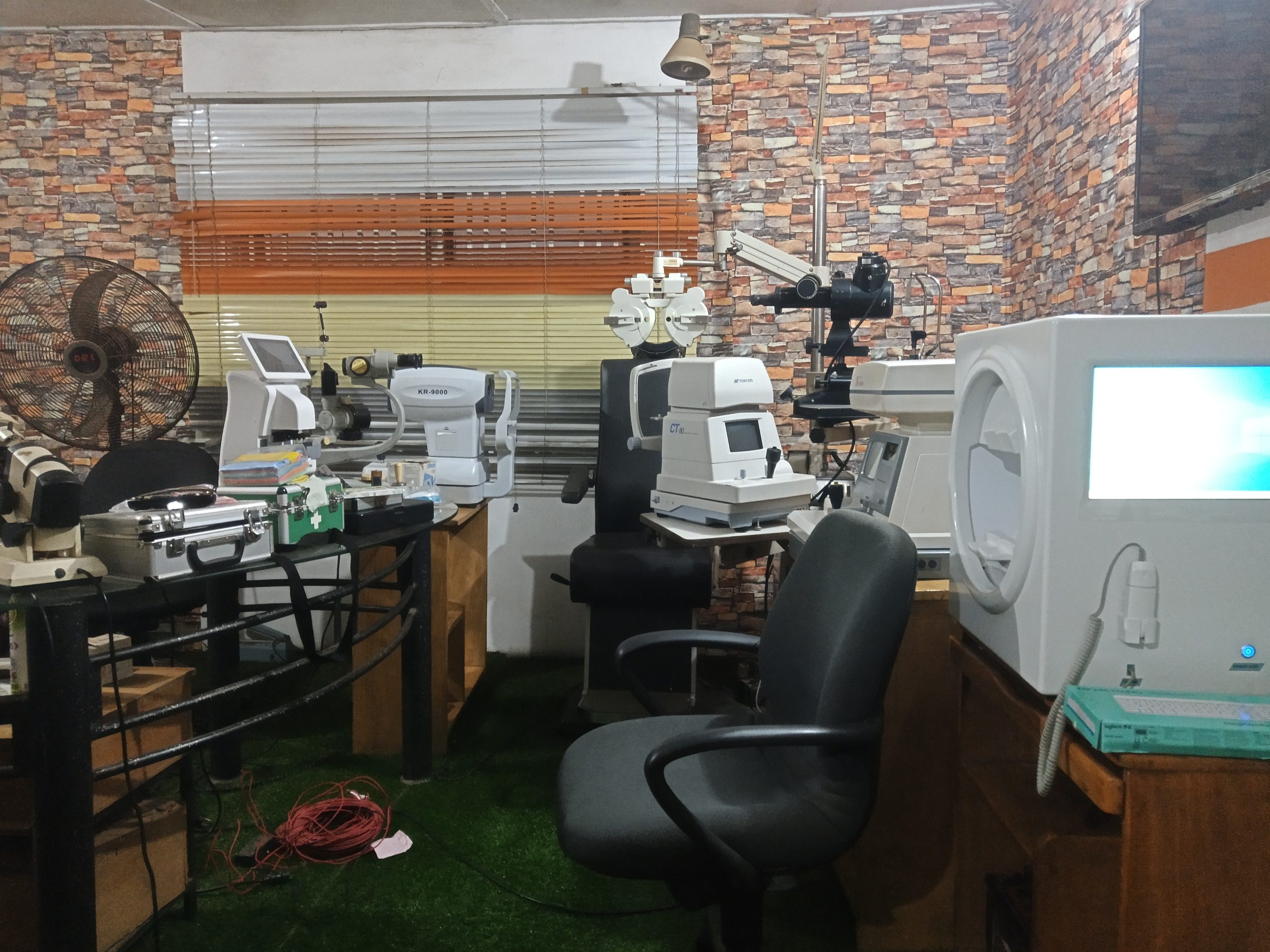
Eyeupdate Clinic & Optical Services Ltd – Trusted Eye Care in Ajuwon, Ifo, Ogun State (near Alagbole, Akute, Ojodu Berger, Iju Ishaga, Fagba, Obawole, Ogba, Ikeja, Agege, Iyana Ipaja, Kola, Command, Abulegba, Sango, Ota, Matogun, Lambe, Koye Oke, Osere, Mowe Ibafo, Ojota, Elliot bus stop, Lagos.
Welcome to Eyeupdate Eye Clinic & Optical Services – Your Premier Eye Care Center in Ajuwon, Ogun State & Lagos State.
Are you searching for professional, affordable eye care services in Ajuwon, Ifo, Ogun State? Look no further! At Eyeupdate Eye Clinic, we are committed to helping you see clearly and live better through comprehensive eye examinations, advanced treatments, and personalized eye care solutions.
Expert Eye Care Services in Ajuwon, Ogun State
Our experienced team of ophthalmologists, Opticians and optometrists provides a wide range of eye health services, including:
Comprehensive Eye Examinations in Ajuwon and Ifo
Cataract Diagnosis & Treatment in Ogun State
Glaucoma Screening & Management
Eyeglasses & Contact Lenses Fitting
Pediatric Eye Care Services for children in Ogun State
Emergency Eye Care & Eye Injury Treatment
Treatment for Eye Infections & Other Conditions
Why Choose Eyeupdate Clinic & Optical Services?
Trusted Eye Care Provider in Ajuwon, Ifo, Ogun State
State-of-the-Art Diagnostic Equipment for accurate eye health assessment
Affordable Eye Care Services tailored to your needs
Friendly, Caring Staff dedicated to your comfort and well-being
Convenient Location in Ajuwon with flexible appointment scheduling
Community-Focused Eye Health Solutions in Ogun State
Book Your Eye Examination Today
Your vision is invaluable. Schedule an appointment with our professional eye care team in Ajuwon, Ifo, Ogun State. Call us at 08034971582 or use our online booking form to secure your visit. We are here to help you see the world more clearly!
Visit Us at Eyeupdate Clinic for your vision needs
Address: 1, Ajuwon bus stop beside M. R. S. Petrol station, Ajuwon, Ifo, Ogun State
Hours: Monday – Saturday, 8:00 AM – 9:00 PM
Phone: 08068084591, 08034971582
Email: info@eyeupdate.com.ng
Stay Updated on Eye Health Tips & Special Offers
Follow us on social media for the latest updates, eye health tips, and exclusive offers tailored for our community in Ogun State.
[Insert social media icons/links]
Your Eyes Deserve Expert Care — Visit Eyeupdate Clinic in Ajuwon, Ifo, Ogun State Today!
Astigmatism is a common vision condition that causes blurred vision. It occurs when the cornea (the clear front cover of the eye) is irregularly shaped or sometimes because of the curvature of the lens inside the eye.
An irregularly shaped cornea or lens prevents light from focusing properly on the retina, the light-sensitive surface at the back of the eye. As a result, vision becomes blurred at any distance. This can lead to eye discomfort and headaches.
Astigmatism frequently occurs with other vision conditions like myopia (nearsightedness) and hyperopia (farsightedness). Together these vision conditions are referred to as refractive errors because they affect how the eyes bend or “refract” light.
There are many causes to astigmatism. It can be hereditary and is usually present from birth. It can decrease or increase over time.
A comprehensive optometric examination will include testing for astigmatism. If necessary, your optometrist can provide eyeglasses or contact lenses that correct the astigmatism by altering the way light enters the eyes.
Another option for treating astigmatism is a corneal procedure called orthokeratology (ortho-k). In this painless, noninvasive procedure, the patient wears a series of specially designed rigid contact lenses to gradually reshape the curvature of the cornea.
Laser surgery can also treat some types of astigmatism. The laser changes the shape of the cornea by removing a small amount of eye tissue.
The curvature of the cornea and lens bends the light entering the eye in order to focus it precisely on the retina at the back of the eye. In astigmatism, the surface of the cornea or lens has a somewhat different curvature.
the surface of the cornea is shaped more like a football instead of round like a basketball, the eye is unable to focus light rays to a single point. Vision becomes out of focus at any distance.
In addition, the curvature of the lens inside the eye can change, resulting in an increase or decrease in astigmatism. This change frequently occurs in adulthood and can precede the development of naturally occurring cataracts.
Sometimes astigmatism may develop following an eye injury or eye surgery.
Astigmatism also occurs due to a relatively rare condition called keratoconus in which the cornea becomes progressively thinner and cone-shaped. This results in a large amount of astigmatism, which causes poor vision that cannot be clearly corrected with eyeglasses. People with keratoconus usually need contact lenses for clear vision and eventually may need a corneal transplant.
An optometrist can diagnose an astigmatism through a comprehensive eye examination. Testing for astigmatism measures how the eyes focus light and determines the power of any optical lenses needed to improve vision. This examination may include:
Visual acuity-When you read letters on a distance chart, you are measuring your visual acuity. Visual acuity is given as a fraction (for example, 20/40). The top number is the standardized testing distance (20 feet) and the bottom number is the smallest letter size read. A person with 20/40 visual acuity would have to get within 20 feet to read a letter that should be seen clearly at 40 feet. Normal distance visual acuity is 20/20.
Keratometry/Topography-A keratometer is the primary instrument used to measure the curvature of the cornea. By focusing a circle of light on the cornea and measuring its reflection, it is possible to determine the exact curvature of that area of the cornea’s surface. This measurement is particularly critical in determining the proper fit for contact lenses. A corneal topographer, which is gaining use, generates a contour map of the cornea and provides even more detail of the cornea’s shape.
Refraction-Using an instrument called a phoropter, your optometrist places a series of lenses in front of your eyes and measures how they focus light. This is performed using a handheld lighted instrument called a retinoscope or an automated instrument that evaluates the approximate focusing power of the eye. Based on your responses, the power is then refined to determine the lenses that allow the clearest vision. Despite improved technology, patient input remains integral in determining vision needs.
With the information from these tests, your optometrist can determine if you have astigmatism. Your optometrist will use these findings, combined with those of other tests performed, to determine the power of any lens correction you need to provide clear, comfortable vision. Once testing is complete, your optometrist can discuss treatment options.
People with astigmatism have several options to regain clear vision. They include:
Eyeglasses. People with astigmatism primarily choose eyeglasses to improve their vision. The eyeglasses contain a special cylindrical lens prescription that compensates for the astigmatism. This provides additional power in specific parts of the lens.
Generally, a single-vision lens is prescribed to provide clear vision at all distances. However, patients over age 40 who have presbyopia may need a bifocal or progressive addition lens.
Contact lenses. Some people will have better vision with contact lenses rather than eyeglasses. Contact lenses may provide clearer vision and a wider field of view. However, since contact lenses are worn directly on the eyes, they require regular cleaning and care to safeguard eye health.
Standard soft lenses may not be effective in correcting astigmatism. However, special toric soft contact lenses can correct for many types of astigmatism. Because rigid gas-permeable contact lenses maintain their regular shape while on the cornea, they can compensate for the cornea’s irregular shape and improve vision for people with astigmatism.
Orthokeratology.Orthokeratology (ortho-k) involves the fitting of a series of rigid contact lenses to reshape the cornea. The patient wears contact lenses for limited periods, such as overnight, and then removes them. People with moderate astigmatism may be able to temporarily obtain clear vision without lenses for most of their daily activities. Orthokeratology does not permanently improve vision. If patients stop wearing the retainer lenses, their vision may return to its original condition.
Laser and other refractive surgery procedures. Astigmatism can also be corrected by reshaping the cornea through LASIK (laser in situ keratomileusis) or PRK (photorefractive keratectomy). PRK removes tissue from the superficial and inner layers of the cornea. LASIK removes tissue only from the inner layer of the cornea.
If you have an astigmatism, you have a wide range of options to correct your vision problem. In consultation with your optometrist, you can select the treatment that best meets your visual and lifestyle needs
Cerebral malaria can be diagnosed by a simple eye examination, a method that is both quick and cheap and could save thousands of lives in malarial regions, a new study shows.
Diagnosing cerebral malaria — a severe complication of malaria in which the Plasmodium falciparum parasite infects capillaries that flow through the tissues of the brain — can be difficult, as patients can be unconscious and have a number of other illnesses.
Now researchers have found that certain changes on the retina, the light sensitive tissue at the back of the eye, are unique to severe forms of malaria.
This will enable doctors to determine whether a child is suffering from cerebral malaria or some other, unrelated illness, and prescribe immediate treatment accordingly.
The findings are published this week (6 November) in the American Journal of Tropical Medicine and Hygiene.
The team led by Nick Beare of the UK-based Royal Liverpool University Hospital analysed the retinas of 45 children admitted to hospital in Blantyre, Malawi with cerebral malaria.
They found that white opaque patches and whitened blood vessels on the retina were unique signs of cerebral malaria. Other signs include bleeding of the retina and swelling of the optic nerve.
The diagnosis only requires an instrument called an ophthalmoscope, which is commonly used in Africa for studying eye disease.
“Diagnosis requires special training in eye examination, but is relatively straightforward and cost effective, which is essential in resource-poor settings such as Africa,” says Beare.
His team suggests that the malaria parasites stick to the linings of the small blood vessels in the brain and eyes where they disrupt oxygen and nutrients supply, causing the unique whitening of blood vessels in the eye.
Richard Idro of the Kenya Medical Research Institute says that the specific nature of the changes in the eye makes them useful for differentiating between coma due to malaria and coma from other causes.
A multi-centre evaluation of the findings will be undertaken by researchers in Gabon, the Gambia, Ghana and Kenya. “If they prove useful, doctors will need to be trained in the recognition of these signs,” says Idro.
Willis Akhwale, head of the department of malaria control at Kenya’s Ministry of Heath, welcomed the study, but cautioned that it is vital to test the methodology to ensure that correct diagnosis is made so that malaria drugs are not prescribed for other illnesses.
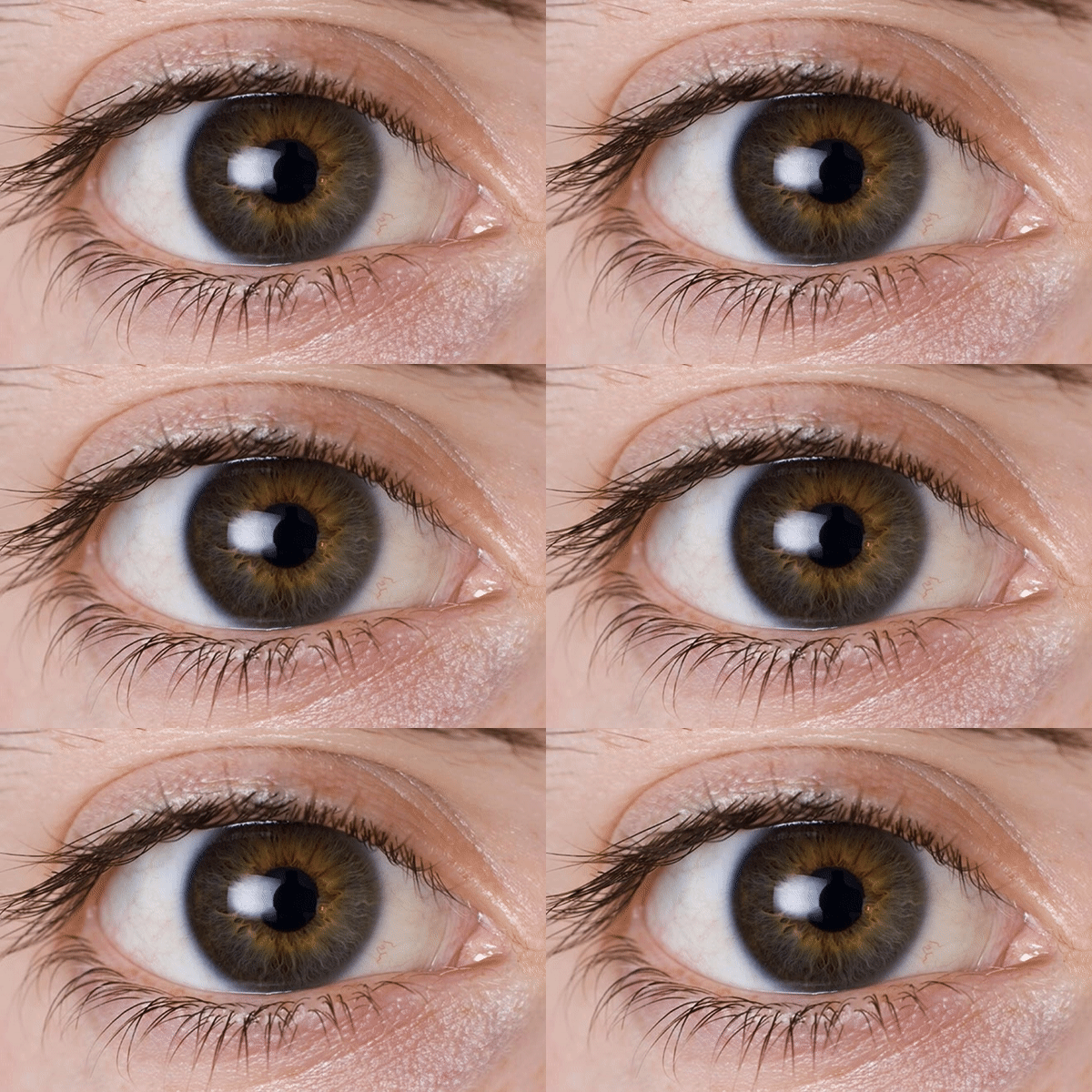
Eye twitching — which actually is twitching of an eyelid — is common and harmless.
Most eye twitching lasts only a few minutes, but sometimes an eyelid twitch can persist for days or longer. If you have an eye twitch that doesn’t go away relatively quickly, see an eye doctor.
The medical term for eye twitching is myokymia.
If you experience eye twitching that doesn’t go away, this could signal a serious neurological condition affecting the eyelid — such as blogs to spasm orhemifacial spasm.
These relatively rare conditions are more obvious and severe than common eye twitching and should be evaluated immediately by an eye doctor.
What causes eye twitching?
Triggers of eye twitching include:
Stress
Fatigue
Eye strain
Caffeine
Alcohol
Dry eyes
Nutrition problems
Allergies
If you experience eye twitching, take a close look at this list and note which of these potential triggers might apply to you. Sometimes, making minor changes to your diet and lifestyle can significantly reduce your risk of eye twitching or help make an eyelid twitch disappear.
Eye twitching causes and fixes
1. Stress
Stress is probably the most common cause of eye twitching. Yoga, breathing exercises, spending time with friends or pets and getting more down time into your schedule are ways to reduce stress that may be causing your eyelid twitch.
2. Fatigue
Lack of sleep, whether because of stress or some other reason, can trigger eye twitching. Catching up on your sleep and having a consistent sleep schedule can help.
3. Eye strain
Eye strain — particularly digital eye strain from overuse of computers, tablets and smartphones — also is a common cause of eyelid twitching.
Follow the “20-20-20 rule” when using digital devices: Every 20 minutes, look away from your screen and allow your eyes to focus on a distant object (at least 20 feet away) for 20 seconds or longer. This reduces fatigue that may trigger eye twitching.
Also, ask your eye doctor about computer eyeglasses to relieve digital eye strain.
Eye twitching — which actually is twitching of an eyelid — is common and harmless.
Most eye twitching lasts only a few minutes, but sometimes an eyelid twitch can persist for days or longer. If you have an eye twitch that doesn’t go away relatively quickly, see an eye doctor.
The medical term for eye twitching is myokymia.
If you experience eye twitching that doesn’t go away, this could signal a serious neurological condition affecting the eyelid — such as blepharospasm
. These relatively rare conditions are more obvious and severe than common eye twitching and should be evaluated immediately by an eye doctor.
What causes eye twitching?
Triggers of eye twitching include:
Stress
Fatigue
Eye strain
Caffeine
Alcohol
Dry eyes
Nutrition problems
Allergies
If you experience eye twitching, take a close look at this list and note which of these potential triggers might apply to you. Sometimes, making minor changes to your diet and lifestyle can significantly reduce your risk of eye twitching or help make an eyelid twitch disappear.
When your eyelid is twitching, you might think everyone else can see it. But most eye twitches are subtle and are not easily seen by others.
Eye twitching causes and fixes
1. Stress
Stress is probably the most common cause of eye twitching. Yoga, breathing exercises, spending time with friends or pets and getting more down time into your schedule are ways to reduce stress that may be causing your eyelid twitch.
2. Fatigue
Lack of sleep, whether because of stress or some other reason, can trigger eye twitching. Catching up on your sleep and having a consistent sleep schedule can help.
3. Eye strain
Eye strain — particularly digital eye strain from overuse of computers, tablets and smartphones — also is a common cause of eyelid twitching.
Follow the “20-20-20 rule” when using digital devices: Every 20 minutes, look away from your screen and allow your eyes to focus on a distant object (at least 20 feet away) for 20 seconds or longer. This reduces fatigue that may trigger eye twitching.
Also, ask your eye doctor about computer eyeglasses to relieve digital eye strain.
Infographic: How To Stop Eye Twitching [Enlarge]
4. Caffeine
Too much caffeine can trigger eye twitching. Try cutting back on coffee, tea and soft drinks (or switch to decaffeinated versions) for a week or two and see if your eye twitching disappears.
5. Alcohol
If you experience eye twitching after drinking beer, wine or liquor, try abstaining for a while, since alcohol consumption may cause eyelids to twitch.
6. Dry eyes
Many adults experience dry eyes, especially after age 50. Dry eyes also are very common among people who use computers, take certain medications (especially antihistamines and some antidepressants), wear contact lenses and consume caffeine and/or alcohol.
If you have a twitching eyelid and your eyes feel gritty or dry, see your eye doctor for a dry eye evaluation. Restoring moisture to the surface of your eye may stop the eye twitching and decrease the risk of twitching in the future.
7. Nutrition problems
Some reports suggest a lack of certain nutritional elements, such as magnesium, can trigger eyelid spasms. Although these reports are not conclusive, this may be another possible cause of eye twitching.
If you are concerned that your diet may not be supplying all the nutrients you need for healthy vision, discuss this with your eye doctor before purchasing over-the-counter nutritional supplements.
8. Allergies
People with eye allergies can have itching, swelling and watery eyes. Rubbing your eyes because of allergy symptoms releases histamine into your eyelid tissues and tear film, which may cause eye twitching.
Sometimes, over-the-counter eye drops formulated to reduce allergy symptoms can be helpful. But antihistamines in these drops can cause dry eyes. It’s best to consult your eye doctor to make sure you’re doing the right thing for your eyes if you experience allergy symptoms and eye twitching.
Another way to stop eye twitching: Botox
In rare cases, some eye twitching just won’t go away, despite applying the remedies above.
Persistent eyelids twitches can be treated with Botox injections to stop the involuntary muscle contractions in the eyelid that cause the twitching.
When to see an eye doctor
See an eye doctor immediately if you experience persistent eye twitching, sudden changes in appearance or movement of half your face (including your eyelids), or if both eyelids clamp down so tight it’s impossible to open your eyes. These can be signs of a serious condition.
According to the World Health Organization, cataracts cause a third of worldwide blindness, affecting approximately 12.6 million people. Cataracts additionally cause moderate to severe vision loss to 52.6 million individuals, 99% of whom live in developing countries.
Although it is a relatively simple condition to treat surgically in the developed world, in many developing countries, access to eye care is extremely limited. Moreover, as populations age and average life expectancy continues to increase worldwide, the number of people with cataracts will only grow more widespread.
A Healthy Eye and an Eye with A Cataract
Risk Factors
Biological aging is the most common cause of cataracts, but exposure to ultraviolet radiation, skin diseases, injury, infection, smoking, and genetic factors are also causes. Some children are even born with the condition.
Those living in developing countries, particularly those with agrarian societies, are at increased risk. Individuals who spend much of their day working outdoors without eye protection are exposed to UV-B radiation, which can lead to cataracts.
Prevention
While there is no way to completely prevent getting cataracts, the following can lessen the likelihood of developing them:
1. Living a healthy lifestyle by reducing smoking and alcohol consumption
2. Avoiding eye trauma by wearing safety goggles
3. Wearing sunglasses to protect eyes from UV radiation
Treatment
Cataract removal is a simple, non-invasive surgical process with a high success rate – 90% of patients report a corrected vision of 20/40 or better afterwards. SEE performs three types of cataract surgery: Phacoemulsification (or “Phaco”), Extra Capsular Cataract Extraction (ECCE) and Manual Small Incision Cataract Surgery (MSICS).
Cataracts in the developing world generally have gone untreated for a longer period of time than in places like the United States. Thus they are usually denser and harder to remove. MSICS is the generally the ideal technique to use, as it allows the doctor to get the more mature cataract out in a shorter amount of time than if they were to use Phaco.
Doctors most commonly use Phaco in the developed world. The technique utilizes an expensive handheld ultrasonic probe, which emulsifies (turns to liquid) the clouded lens, which surgeons then replace with an artificial (man-made) lens. ECCE uses a larger incision than phaco and generally needs stitches and thus is less commonly used. The Manual Small Incision technique improves upon ECCE, in that it does not require stitches. Find out more about MSICS here .
SEE International & Cataracts Around the World
SEE works diligently to reduce the number of cataract cases around the world in the following ways:
Performing cataract surgery
Teaching appropriate cataract surgical techniques, such as Manual Small Incision Cataract Surgery.
Training local eye care personnel in ophthalmology in rural and urban areas.
Strengthening local health care infrastructure.
An intraocular lens implant is an artificial replacement for the lens of your eye. It’s part of the surgery to fix cataracts.
How Your Eye Works
Each eye has a lens — a window made of clear protein and water that sits behind the pupil. The lens focuses light onto the retina, which sends it to your brain.
As you get older, the proteins change and parts of your lens turn cloudy. This is known as a cataract. It can make things look blurry or give them a brownish tint.
Cataracts are a leading cause of blindness, especially in older people. But they can be corrected through surgery — a procedure that’s done more than 2 million times a year in the United States.
The Implant
An intraocular lens implant, or IOL, is made of a clear plastic, and it’s about a third the size of a dime. There are several different types:
Monofocal IOL: This is the most common. Unlike your natural lens, which can stretch or bend to help your eye focus, this implant stays focused at one fixed distance. If yours focuses at a distance, you might be able to see things far away but need glasses to read or see close up.
CONTINUE READING BELOW
Multifocal implant: Like glasses with bifocal or progressive lenses, this lens has areas that help you see things at different distances. It could take several months for your brain to adapt so yourvision seems natural.
Accommodating IOL: This flexible option acts more like your natural lens and focuses at more than one distance. It makes you less likely to need reading glasses.
Toric IOL: You’ll get this is if you haveastigmatism, or a cornea that’s more football-shaped than round. This can make vision blurry all over, not just close up or far away. This lens lessens astigmatism so you won’t need glasses to correct it after your surgery.
The Surgery
If you have a cataract, you’ll see anophthalmologist. This doctor specializes in eye problems. He’ll probably tell you it’s best to wait to remove the cataract until it starts to affect your daily life. He can do the surgery at a hospital or an outpatient clinic.
To get you ready, your doctor will:
Measure your eye. This will help him pick the right implant for you.
Give you medicated eye drops to take for a few days ahead of time
Ask you to stop taking some medicines or to skip wearing contact lenses for several days beforehand
CONTINUE READING BELOW
On the day of surgery, he’ll:
Numb your eye
Give you a drug to help you relax. You may see light during the procedure, but you should feel nothing or only a gentle pressure.
Make a tiny cut through your cornea to get to the lens
Break the lens up into pieces and remove it bit by bit
You can usually go home in less than an hour, but you’ll need someone else to drive.
Is It Risky?
Any surgery has a chance of complications. It’s rare after an intraocular lens implant, but you might notice bleeding or get an infection. Redness or swelling are more common.
More serious risks include:
A detached retina, which happens when that layer of nerve cells separates from the back of your eye. This is a medical emergency.
Dislocation — when the implant moves out of position
You may also get an after-cataract anywhere from weeks to years after surgery. This happens when the tissue around your new lens gets cloudy and your eyesight blurs. Your doctor can fix this with a painless laser procedure.
CONTINUE READING BELOW
Follow-Up Care
It’ll take about 8 weeks to fully heal. During that time:
Keep your eye covered with a patch or glasses for the first several days — even when you sleep.
Don’t rub or press your eye, even if it’s itchy or oozes a bit of fluid.
Take the medicated eye drops your doctor prescribes. You’ll use them for several weeks to help your eye heal.
Avoid most exercise or heavy lifting. The doctor will tell you when you can do those things again
An intraocular lens implant is an artificial replacement for the lens of your eye. It’s part of the surgery to fix cataracts.
How Your Eye Works
Each eye has a lens — a window made of clear protein and water that sits behind the pupil. The lens focuses light onto the retina, which sends it to your brain.
As you get older, the proteins change and parts of your lens turn cloudy. This is known as a cataract. It can make things look blurry or give them a brownish tint.
Cataracts are a leading cause of blindness, especially in older people. But they can be corrected through surgery — a procedure that’s done more than 2 million times a year in the United States.
The Implant
An intraocular lens implant, or IOL, is made of a clear plastic, and it’s about a third the size of a dime. There are several different types:
Monofocal IOL: This is the most common. Unlike your natural lens, which can stretch or bend to help your eye focus, this implant stays focused at one fixed distance. If yours focuses at a distance, you might be able to see things far away but need glasses to read or see close up.
CONTINUE READING BELOW
Multifocal implant: Like glasses with bifocal or progressive lenses, this lens has areas that help you see things at different distances. It could take several months for your brain to adapt so yourvision seems natural.
Accommodating IOL: This flexible option acts more like your natural lens and focuses at more than one distance. It makes you less likely to need reading glasses.
Toric IOL: You’ll get this is if you haveastigmatism, or a cornea that’s more football-shaped than round. This can make vision blurry all over, not just close up or far away. This lens lessens astigmatism so you won’t need glasses to correct it after your surgery.
The Surgery
If you have a cataract, you’ll see anophthalmologist. This doctor specializes in eye problems. He’ll probably tell you it’s best to wait to remove the cataract until it starts to affect your daily life. He can do the surgery at a hospital or an outpatient clinic.
To get you ready, your doctor will:
Measure your eye. This will help him pick the right implant for you.
Give you medicated eye drops to take for a few days ahead of time
Ask you to stop taking some medicines or to skip wearing contact lenses for several days beforehand
CONTINUE READING BELOW
On the day of surgery, he’ll:
Numb your eye
Give you a drug to help you relax. You may see light during the procedure, but you should feel nothing or only a gentle pressure.
Make a tiny cut through your cornea to get to the lens
Break the lens up into pieces and remove it bit by bit
You can usually go home in less than an hour, but you’ll need someone else to drive.
Is It Risky?
Any surgery has a chance of complications. It’s rare after an intraocular lens implant, but you might notice bleeding or get an infection. Redness or swelling are more common.
More serious risks include:
A detached retina, which happens when that layer of nerve cells separates from the back of your eye. This is a medical emergency.
Dislocation — when the implant moves out of position
You may also get an after-cataract anywhere from weeks to years after surgery. This happens when the tissue around your new lens gets cloudy and your eyesight blurs. Your doctor can fix this with a painless laser procedure.
CONTINUE READING BELOW
Follow-Up Care
It’ll take about 8 weeks to fully heal. During that time:
Keep your eye covered with a patch or glasses for the first several days — even when you sleep.
Don’t rub or press your eye, even if it’s itchy or oozes a bit of fluid.
Take the medicated eye drops your doctor prescribes. You’ll use them for several weeks to help your eye heal.
Avoid most exercise or heavy lifting. The doctor will tell you when you can do those things again
Abeokuta North Local Government.
Abeokuta South Local Government.
Ado-Odo/Ota Local Government.
Ewekoro Local Government.
Ifo Local Government.
Ijebu East Local Government.
Ijebu North Local Government.
Ijebu North East Local Government.
Ijebu Ode Local Government.
Ikenne Local Government.
ImekoAfon Local Government.
Ipokia Local Government.
Obafemi Owode Local Government.
Odogbolu Local Government.
Odeda Local Government.
Ogun Waterside Local Government.
Remo North Local Government.
Sagamu Local Government.
Yewa North Local Government.
Yewa South Local Government.
Residents and visitors of these cities and communities in Ogun State can have an eye check at Eyeupdate Clinic & Optical Supplies, 01, Ajuwon Junction, Ajuwon, Ifo, LGA, Ogun State:
You will be examined by an eye doctor who will diagnose your eye condition and treat it. No distance travelled to get to Eyeupdate is futile as you will be given full attention.
Our products and services include:
Computerized eye check, Eye disease detection and treatment, corrective eye glasses/lenses, contact lenses, eye surgeries by ophthalmologists if need be, low vision management, night drivin glasses, sales and supply of optical equipment and accessories.
Eyeupdate clinic & optical supplies provides eye check, prescription eye glasses, eye treatment, contact lenses and general eye care.
Residents of these states can have their eyes examined at 01, Ajuwon junction beside M.R.S. filling station:
Lagos
Federal Capital Territory
Ogun
Akwa Ibom
Cross River
Kaduna
Katsina
Anambra
Benue
Borno
Imo
Kano
Kwara
Niger
Oyo
Adamawa
Delta
Edo
Jigawa
Kebbi
Kogi
Osun
Taraba
Yobe
Abia
Bauchi
Enugu
Ondo
Plateau
Rivers
Sokoto
Bayelsa
Ebonyi
Ekiti
Gombe
Nasarawa
Zamfara
We provide excellent eye care services for you, your family and corporate bodies.
You can also get night driving glasses, antiglare lenses, medicated lenses and medicated contact lenses for different conditions.
Those who have cataracts, glaucoma, retinal diseases, low vision and all sorts of eye diseases will get their eyes examined and treated at our location, 01, Ajuwon junction, Ajuwon.
Contact us on telephone: 08107531046, 07030000001 or email us on eyeupdate@consultant.com